I remember observing the mums at my school gates comparing pounds lost or gained (or kilos for you Europeans). The men? They were usually more interested in the recent football or rugby. Are these stereotypical, and outdated observations? Well, yes, and no. They are stereotypical, but we still observe them today. It’s not surprise that girls start to worry about weight and think about dieting from the age of 6.
I wince when someone tells me about a new diet, and I don’t mean a diet where you have positive nutritional aims (e.g. getting more fruit and veg). I’m referring to dieting as a hobby, dieting because it’s the thing to do. (If your diet isn’t working for the 100th time, Karen, maybe it’s your body telling you it DOESN’T NEED to be skinnier).
The more insidious language that creeps in is not to do with dieting, it is diet culture language perpetuated by those who are not even dieting. We personify foods, give them defining characteristics, and frankly, lie to ourselves about what they are.
Cake isn’t naughty, it is cake. Your salad isn’t good, it’s salad. Courgetti is not spaghetti. It is spiralised courgette. (If you like courgetti ok, but for the love of life, please have some carbs with it.)
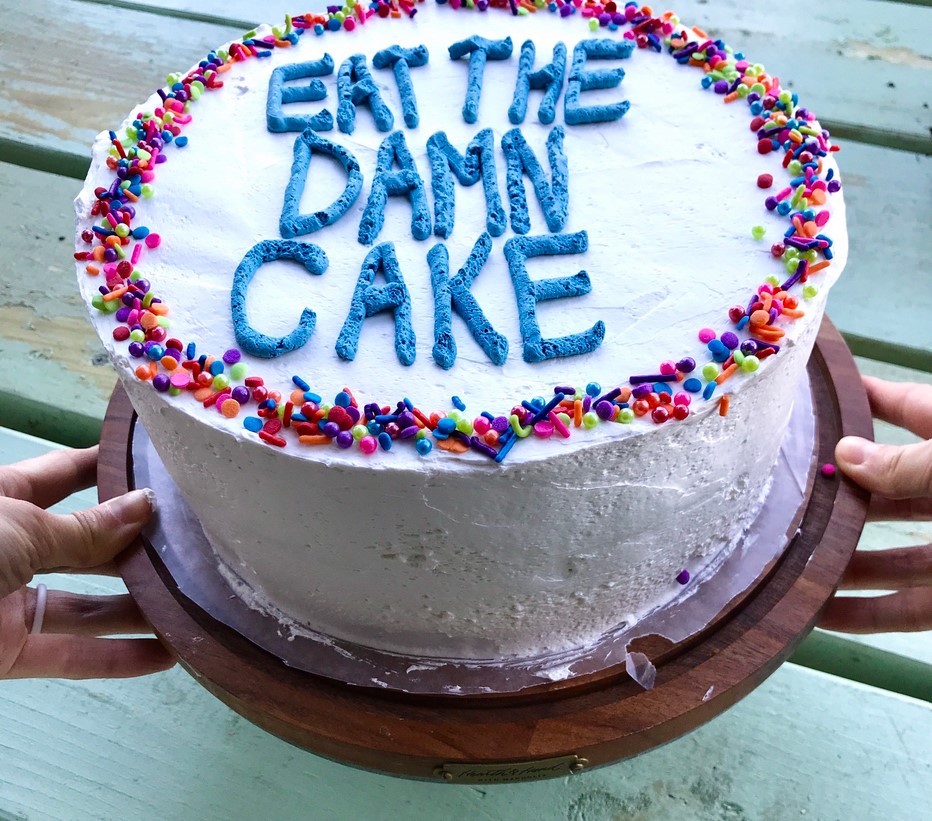
If you want to eat cake, then eat the damn cake and enjoy it. Eat it and appreciate its flavours, hold it to the heavens and worship it for its sweetness, and texture, and decadence. Savour every bite. I remember the first time someone said “ooooh, I shouldn’t have the cake” in my presence. I was so confused. Why not? Did they have an allergy? Were they okay? I asked them and they laughed it off, leaving me just as confused. Later, I came to realise that having cake was just accepted as “naughty”, but I still could not work out why. Before I knew it, diet culture had me in its shackles too, and I was casually dropping the “ooooh, just a tiny slither!!” enough to fit in, but little enough that I was limiting my intake.
Likewise, salad is not good. I mean, I enjoy salad. I find it refreshing and cool, especially on a hot summer’s day. Rather than labelling salad as good, we should be honest – it’s light, easy, and when seasoned well or drowned in sauce can be delicious.
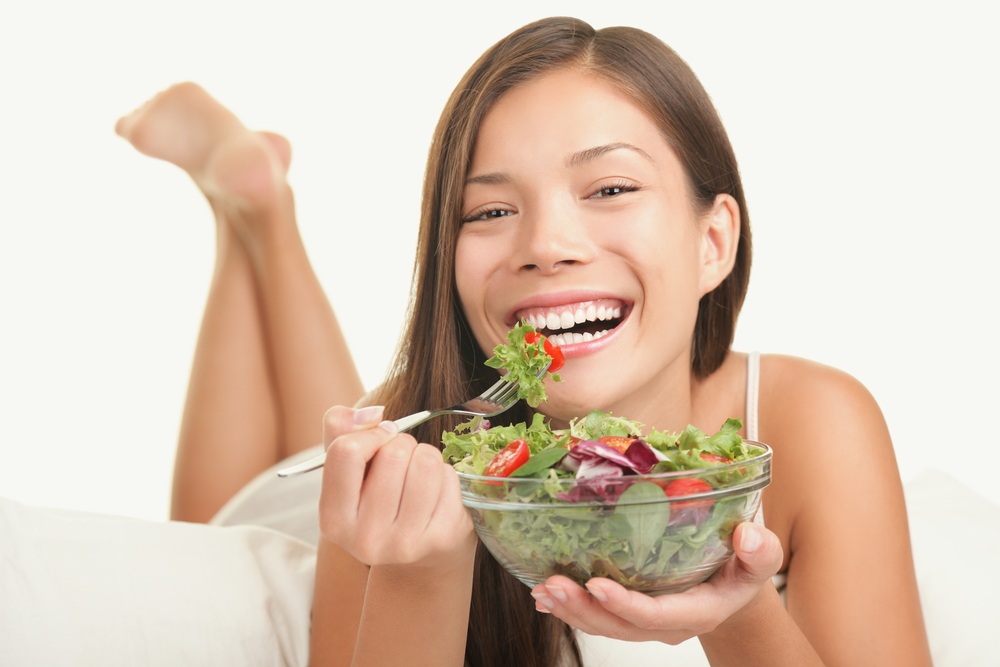
Stop describing food as good/bad, treats or cheats… instead say what it is! Is it sweet, tasty, chewy, melt-in-the-mouth, crunchy, smoky, creamy? Say what it is, not what you’ve been lead to believe it should be.
Trust me, the cake tastes so much better without a large side serving of guilt.
Swap “but” for “because”
“Ooooh, I shouldn’t but/I would but…” don’t. You will enjoy your food so much more if you stop referring to items as naughty/cheat and stop worrying about how it’s going to make you feel after. Food doesn’t need to be earned. Diets don’t work. If you want something, own it. “I want beer because I’m celebrating/I’m gonna have this brownie because it’s delicious”. No “but”s.
In a world full of companies trying to profit off your, allow yourself to have a healthy relationship with food and you’ll save money in the process! Accept meals for what they are and enjoy them. No one thinks they’re going to develop a problem with food until they do, but having a healthy relationship with food does make you less susceptible.
But more than that, you truly never know what someone around you is going through. The words and phrases you choose can help or harm those around you. Which would you rather do?
Sprouting diet culture chat can reinforce negative beliefs in the head of someone with an eating disorder or disordered eating. It can hinder recovery, or even assist someone falling into damaging restrictive habits… or, you can be a reminder to them of what a good relationship with food looks like, help people recover, or avoid the diet/disordered trap entirely.
Food is for fuel and enjoyment (even if it’s a work in progress).
I strongly believe that if I’d had more people around me enjoying food, and fewer people being afraid of carbs, obsessively calorie counting and guilting over their own meals then I might not have ended up so ill.
In all likelihood, you’ve discussed food or your habits with someone with an eating disorder or disordered eating without knowing it.
BEAT estimates that 1.25 million people in the UK have an eating disorder, which would make just over 1 % of the population. This doesn’t include people who are in recovery, or who have disordered eating. Given that most of the data used for this analysis comes from the 00s, and eating disorder awareness and helpline calls have increased significantly since, I think it’s fair to expect that this number is significantly higher now.
In athletes, the numbers are upsetting. Up to 62% of females and 33% of males in aesthetically-orientated sport have disordered eating. More recently, several studies have shown that over ¼ of female college athletes were found to have subclinical eating disorders (subclinical does not mean “not serious”, it means that the symptoms are difficult to identify and therefore not readily observable).
The eating disorder/disordered eating statistics get a little confusing, with so many different sub-categories and crossovers. This can make it a little difficult to pull out an overall number for what % of athletes, and people, struggle.
Treatment and recovery are complicated, prevention is far easier. If you’d rather be kind than cruel, to yourself and others, then reframe your language. We’ve all got enough to worry about at the moment, without worrying about cake.
If you’re interested in learning more about what you can do other than reframing your language, some good resources are:
End ED Crisis – a UK campaign by an amazing bunch of folks
Stats on young girls and dieting
NEDA – more about eating disorder prevention
NEDA – stats on different eating disorders (the wealth of research on college athletes makes the US good to look at for comparison)
 Eating Disorders in Sport: a Huge Bite to Swallow